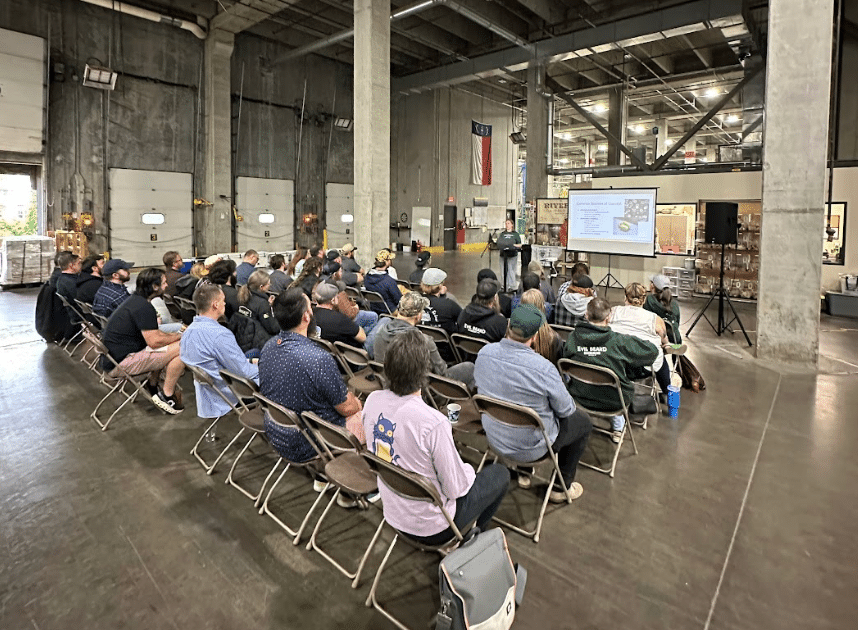
The 2026 Southern Lager Celebration was a great success! We got to host X of our customers from X states all over the South for two days visiting Biltmore Estate’s barley farms, touring Sierra Nevada, and talking shop about crafting lagers.
This year’s celebration had the first technical and sensory education addition, with a day of presentations to help our customers craft better lagers. We heard from White Labs, Crosby Farms, The Southern Growl, and members of our team like Tina Hoffert on topics such as ALDC Optimization in lagers, pressurized lager fermentations, and much, much more. Here are all of the resources from the day:
We’ve received positive feedback about this second day of education before we sampled lagers! Thanks y’all for participating, and for sharing your thoughts. If you have follow up questions from the Southern Lager Celebration or about any of this content, please contact sales@riverbendmalt.com.
https://riverbendmalt.com/wp-content/uploads/2019/05/Riverbend-Malt-for-Craft-Beer.png00Scott Hickmanhttps://riverbendmalt.com/wp-content/uploads/2019/05/Riverbend-Malt-for-Craft-Beer.pngScott Hickman2026-06-02 15:36:372026-06-02 15:43:05Recap: The Riverbend Malt House 2026 Southern Lager Celebration
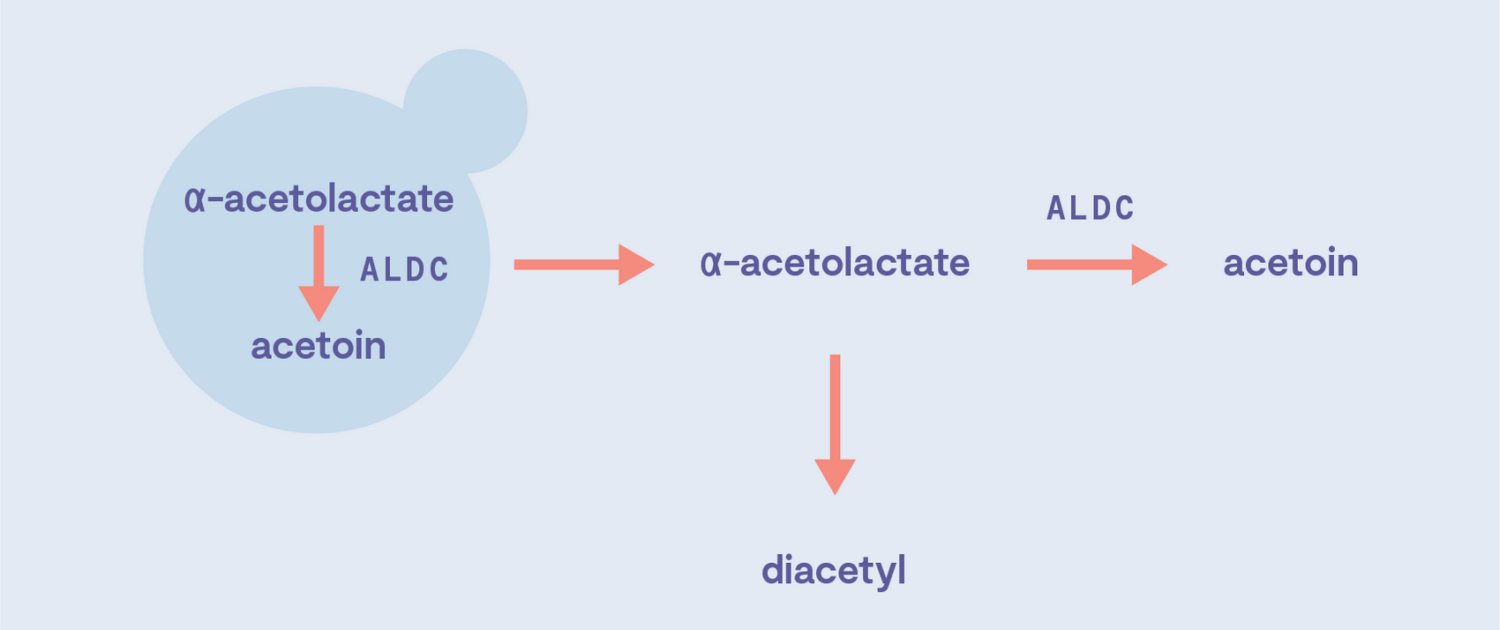
One of the most common off-flavors found in beer is the buttery, slick compound known as diacetyl. This vicinal diketone compound is created during primary fermentation when the yeast produces an intermediate product alpha-acetolactate from the amino acid called valine. Alpha-acetolactate will eventually exit the yeast cell and oxidize into 2,3-butanedione (diacetyl), creating a negative off-flavor in beer. It has a small sensory threshold of 17-70 µg/L before individuals can detect it, and more often than not it negatively impacts the final product. (Diacetyl can also impact spirits production, because it is a volatile compound that can carry over into finished product through the distillation process.) This article focuses on the enzyme, alpha-acetolactate decarboxylase, and its role in reducing diacetyl in lagers.
One of the challenges of creating a lager is reducing the amount of fruity esters and off-flavors detected in the beer to create a crisp, clean flavor profile. The bottom-fermenting lager yeast, Saccharomyces pastorianus, was developed for this very purpose. By the combination of common ale yeast Saccharomyces cerevisiae and the cold-tolerant yeast Saccharomyces eubayanus, a yeast strain was developed that could ferment sugars into alcohol at low temperatures while also reducing the amount of flavor compounds produced. Although lower temperatures produce less esters, it also inhibits the reuptake of diacetyl by the lager yeast to convert it back into non-aromatic compounds. Therefore, many brewers add a diacetyl rest during the last stages of fermentation to decrease levels to below the sensory threshold.
Producing a refreshing, more neutral beer flavor profile combines low fermentation temperatures along with time in the maturation vessel (lagering). Along with creating a brite finished product, the lagering process allows the yeast to slowly uptake the diacetyl compounds in the beer. The yeast then convert them into non-flavor active compounds, such as acetoin or 2,3-butanediol. This process is slow and spontaneous, and can take anywhere from three weeks to several months to complete due to the low temperatures it needs to take place. However, many businesses found the diacetyl rest and lagering process costs extra time, utilities, and tank accessibility. This led to the brewing community to try and create a way to convert diacetyl into acetoin faster to reduce time spent in maturation.
One proposed solution was to commercially produce the alpha-acetolactate decarboxylase (ALDC) enzyme to use as an additive at the start of fermentation. This enzyme is responsible for the breakdown (or decarboxylation) of the diacetyl precursor, alpha-acetolactate, and converting it into acetonin. It is produced from many different types of bacterium, such as Bacillus subtilis. The idea is that when the enzyme is added during the yeast pitch, it will work to convert alpha-acetolactate produced by the yeast into non-flavor compounds through the duration of fermentation. This reduces the amount of diacetyl left when the beer finally reaches the lagering step, allowing brewers to reduce the amount of maturation time needed to approve the beer for packaging. Several ALDC manufacturers also claim that the enzyme will allow businesses to skip the diacetyl rest during fermentation. This speeds up the fermentation process all together and open up tank access faster.
What’s your experience employing ALCD to reduce diacetyl in lagers? What other challenges have come up in your lagering process? Give us a shout and we’ll help you troubleshoot.
Written By Tina Hoffert
References:
Boulton, C. and Quain, D. (2001) Brewing yeast and fermentation /. Oxford: Blackwell Science.
Briggs, D.E. (2004) Brewing :science and practice. Cambridge: Woodhead Pub.
Dasari, S. and Kölling, R. (2011) ‘Cytosolic Localization of Acetohydroxyacid Synthase Ilv2 and Its Impact on Diacetyl Formation during Beer Fermentation’, Applied and Environmental Microbiology, 77(3), pp. 727–731. Available at: https://doi.org/10.1128/AEM.01579-10.
Dulieu, C., Moll, M., Boudrant, J. and Poncelet, D. (2000) ‘Improved Performances and Control of Beer Fermentation Using Encapsulated α-Acetolactate Decarboxylase and Modeling’, Biotechnology progress, 16(6), pp. 958–965. Available at: https://doi.org/10.1021/bp000128k.
Oliveira, R.C., Maciel, V.M.M., Hissa, D.C., França, Í.W. and Gonçalves, L.R.B. (2022) ‘Production of the Food Enzyme Acetolactate Decarboxylase (ALDC) from Bacillus subtilis ICA 56 Using Agro-Industrial Residues as Feedstock’, Fermentation (Basel), 8(12), p. 675. Available at: https://doi.org/10.3390/fermentation8120675.
Spaans, M., Winkler, L.S., van den Broek, M.A. and Daran, J.-M.G. (2026) ‘Diversity of α-acetolactate decarboxylase in the Saccharomycotina yeast subphylum: From discovery to brewing application’, Food microbiology, 134, p. 104903. Available at: https://doi.org/10.1016/j.fm.2025.104903.
Timouma, S., Balarezo-Cisneros, L.N., Schwartz, J.-M., Delneri, D. and Imam, S. (2024) ‘Development of a genome-scale metabolic model for the lager hybrid yeast S. pastorianus to understand the evolution of metabolic pathways in industrial settings’, mSystems, 9(6), p. e0042924. Available at: https://doi.org/10.1128/msystems.00429-24.
https://riverbendmalt.com/wp-content/uploads/2026/03/aldc-2_889f2b8b471b6720943a8eada83d397b.png9311700Scott Hickmanhttps://riverbendmalt.com/wp-content/uploads/2019/05/Riverbend-Malt-for-Craft-Beer.pngScott Hickman2026-03-26 08:43:062026-04-21 18:14:43Reduce Diacetyl in Lagers with the use of ALDC
Riverbend customers love our Rye malt products Carolina Rye and Munich Rye! We asked our Customer Success Representative, Tina Hoffert, to school us on best utilization of this grain in the brewing process. Tina is a graduate of AB Tech Asheville and she was brewing professionally before joining the Riverbend team.
Below, she runs us through Rye 101 with recommendations to combat issues with high-viscosity, and some of her favorite rye beer styles.
Rye 101
Rye (Secale cereale) is a cereal that has been cultivated and grown since ancient times that belongs to the grass family, Gramineae. It is a part of the Triticaea tribe, which also includes wheat and barley. Modern rye varieties are said to have originated from its ancestor Secale montanum. This is a wild rye species found in Mediterranean and Middle Eastern regions along the Black and Caspian Sea. The exact origin of rye is unknown, but some speculate that rye and oats originated as weeds in wheat and barley crops and were later cultivated by farmers.
The majority of rye crops are sown in the fall and harvested in the spring, nicknaming it “winter rye” since it will grow over the winter months. Rye can grow in areas that are too harsh for other winter crops and can survive low temperatures of -31℉, droughts, and nutrient deficiencies. Rye is more resistant to pests and diseases, with the exception of ergot where it is more susceptible. Since rye can grow where other crops fail, it is used as a pioneer crop to improve soils that are considered wasteland or sterile. Rye can also compete well against other unwanted species, so it is used for crop rotation after a harvest to improve overall soil health.
The structure of the rye kernel is made up of three parts- the bran, endosperm, and germ. The endosperm composes the majority of the kernel and contains the starch and protein granules used in the brewing and distilling process. Although rye has 𝛃-glucans present which are commonly attributed to gummy mashes, the characteristic high-viscosity of rye is also attributed to the large amounts of arabinoxylans found in the cereal. The arabinoxylans are water-extractable, and will combine with water to create highly viscous solutions. Unlike barley, rye does not have a husk for use in the lautering process and is usually thinner and smaller than other grains. In comparison to barley, rye has higher concentrations of enzymes (primarily 𝛂-amylase) and can be added to grist bills to increase fermentable extract.
Troubleshooting
Rye malt is known to be problematic in the brewhouse. This is due to its beta-glucan and arabinoxylans content causing the mash to become “gummy” or “sticky” along with its lack of husk for lautering. Here are a few suggestions for managing this grain in the brewhouse…
Extend the germination times to increase enzyme content during the malting process
Adding a beta-glucan rest between 100-120℉ in the mash
Increasing the liquor-to-grist ratio in the brew
Add rice hulls to improve lautering
Fine tune your mill gap to compensate for the smaller grain size. The most common mill gap range for commercial brewing lies between 0.35-0.65mm, depending on mill type and size. Brewers may need to adjust to a smaller mill gap than normal to compensate for the smaller rye grains.
Keep the rye content in the grist bill to 20 percent or less, so that there is enough barley husks to help lauter the rye
Producers love rye malt for its pleasant flavor and aroma characteristics that are commonly spicey, nutty, and earthy. It is often described as having a peppery or clove-like sensory character and astringency to the mouthfeel. Rye malt can also add tanginess to the product, which works very well in farmhouse ales like Sahti or wild fermented beverages such as Kvass. Depending on how the rye is malted and the percentage used in the grist, rye can give color ranging between light straw to dark brown. It can also add a fuller body and good head retention to beers. Over the years we’ve enjoyed many a rye IPA and pale ale, Roggenbier, stouts, porters and farmhouse ales— all with made with Riverbend rye malt.
Let’s dive into these beer styles:
Roggenbier
Roggenbier originated in Bavaria and was popular during the medieval period until the Reinheitsgebot lawdeclared that rye was to only be used for baking bread due to crop failures. This style consists of a grist bill of greater than 50 percent malted rye. It’s darker in color, has strong grain sensory characteristics, with a full-body mouthfeel and rich flavor. Roggenbier is similar to Dunkelweizen in how it is brewed and fermented, but substitutes the wheat for rye.
Rye Pale Ale & Rye IPA
Rye is also commonly used in IPA and Pale Ale beer styles. Rye malt is generally used between 5-30 percent of the grain bill to give beers its characteristic spice and peppery flavors. It creates beers that are light straw to dark brown in color, with good foam and full-bodied mouthfeel. Rya can be found in Belgian-style pale ales such as Tripel.
Farmhouse Ales & Table Beers
Rye malt is a common addition to farmhouse ales and traditional table beers. Styles can include rye saison, Sahti (seen below), mixed-culture beers, and raw beers (beers that have not been boiled). Less common styles include Setomaa koduõlu and Karelian-Baltic taari. The use of rye in these beers are variable and often depends on traditions, brewing region, and desired outcome of the beer.
Kvass
Originating from Northern Europe, the name translates to “bread drink”. This beverage is generally made from stale rye bread, rye flour, and rye malt. It is generally considered to be a non-alcoholic, cereal-based beverage due to its low alcohol content of 2 percent v/v or less. Bread is soaked in water then later fermented with a mixed culture of yeast and lactic acid producing bacteria (LAB). There are many commercially available Kvass products with recipes that can include any combination of mint, raisins, juniper berries, and sugar. It is naturally carbonated and is said to have positive nutritional properties and helps digestive health. The end result should be low-alcohol, slightly sour and sweet, low carbonated drink with bready and rye flavor profiles.
Sahti
This is a traditional farmhouse-style beer found in Finland which includes malted and unmalted rye in the recipe. The beer consists of around 10 percent rye in the grain bill, along with wheat or oats. The style is generally unhopped since it predates the use of hops as a preserving and bittering agent in beer. Traditionally, production was carried out in domestic saunas and wort was made through infusion mashing by adding heated water to the mash. In some cases, the addition of heated stones (similar to steinbier) are added to create kivisaht or “stone sahti”. The wort is generally not boiled and involves juniper branches to filter through. The branches would sit on a filter bed of rye straw in a trough-shaped vessel called a kuurna where wort was filtered then fermented with bakers yeast. The end result is a spiced, 7-8 percent v/v alcohol beer table beer.
Want to add some spice to your next recipe? Our rye malt products are 25 percent off in celebration of #RyeJanuary! ORDER HERE and mention Rye January.
Tell us about your (rye) beers #madewithRiverbend here.
Sources:
Arendt, E.K. and Zannini, E. (2013) Cereal grains for the food and beverage industries. Woodhead Pub. Available at DOI: 10.1533/9780857098924.220
Boulton, C. (2013) Encyclopaedia of brewing. 1st edn. Chichester: Wiley-Blackwell.
Brzozowski, L.J., Szuleta, E., Phillips, T.D., Van Sanford, D.A. and Clark, A.J. (2023) ‘Breeding cereal rye (Secale cereale) for quality traits’, Crop science, 63(4), pp. 1964–1987. Available at: https://doi.org/10.1002/csc2.21022.
Cadenas, R., Caballero, I., Nimubona, D. and Blanco, C.A. (2021) ‘Brewing with Starchy Adjuncts: Its Influence on the Sensory and Nutritional Properties of Beer’, Foods, 10(8), p. 1726. Available at: https://doi.org/10.3390/foods10081726.
Ekberg, J., Gibson, B., Joensuu, J.J., Krogerus, K., Magalhães, F., Mikkelson, A., Seppänen-Laakso, T. and Wilpola, A. (2015) ‘Physicochemical characterization of sahti, an “ancient” beer style indigenous to Finland’, Journal of the Institute of Brewing, 121(4), pp. 464–473. Available at: https://doi.org/10.1002/jib.246.
Galanakis, C.M. (2020) Trends in non-alcoholic beverages /. 1st ed.
Rani, M., Singh, G., Siddiqi, R.A., Gill, B.S., Sogi, D.S. and Bhat, M.A. (2021) ‘Comparative Quality Evaluation of Physicochemical, Technological, and Protein Profiling of Wheat, Rye, and Barley Cereals’, Frontiers in nutrition (Lausanne), 8, p. 694679. Available at: https://doi.org/10.3389/fnut.2021.694679.
Wood, P.J. (2010) ‘Oat and Rye β-Glucan: Properties and Function’, Cereal chemistry, 87(4), pp. 315–330. Available at: https://doi.org/10.1094/CCHEM-87-4-0315.
Our Customer Success Representative Tina Hoffert comes to Riverbend with a professional brewing background, and she’s here in this post to break down the malting process. Without further ado…
Beer is considered one of the oldest fermented beverages in the world. It is generally made from raw cereals, malted cereals, and bread. The process of making beer and cereal-based spirits uses the biochemical processes as follows: formation of enzymes and available starches from germination of grain (malting), breakdown of starches to fermentable sugars using malted grains (brewing), then fermenting the mash or wort to produce CO2 and alcohol (fermentation). For spirits, there is another step of separating and concentrating the alcohol from the fermented mixture by distillation. For brewers and distillers alike, they need the available extract (or fermentable sugars) found in the grain and adjuncts to produce their desired alcohol content in the end product. Malting is the process of taking raw cereals and using the seed’s natural germination cycle to modify the grains to have available extract and enzymes for brewing. In the malt house the process follows four main steps: steeping, germination, kilning, and packaging.
Malting Step One: Steeping
The first step of malting is the steeping step. This process involved soaking the grain in water, which starts the germination process. The water awakens the dormant grain and increases moisture content inside the grain to the correct level for germination. The steep water must be a controlled temperature to achieve appropriate modification. With elevated temperatures, water uptake would be faster but microbial growth would also be accelerated. With lower temperatures, the water uptake would be slower and take up unnecessary time. The steep water is periodically changed and refreshed during the steeping process. During the water change, air is brought through the malt to exchange CO2 for oxygen and reduce heat produced during steeping (called an air rest). Alternating between the steeping and air rest steps is determined by the maltster depending on the specific product being made.
Malting Step Two: Germination
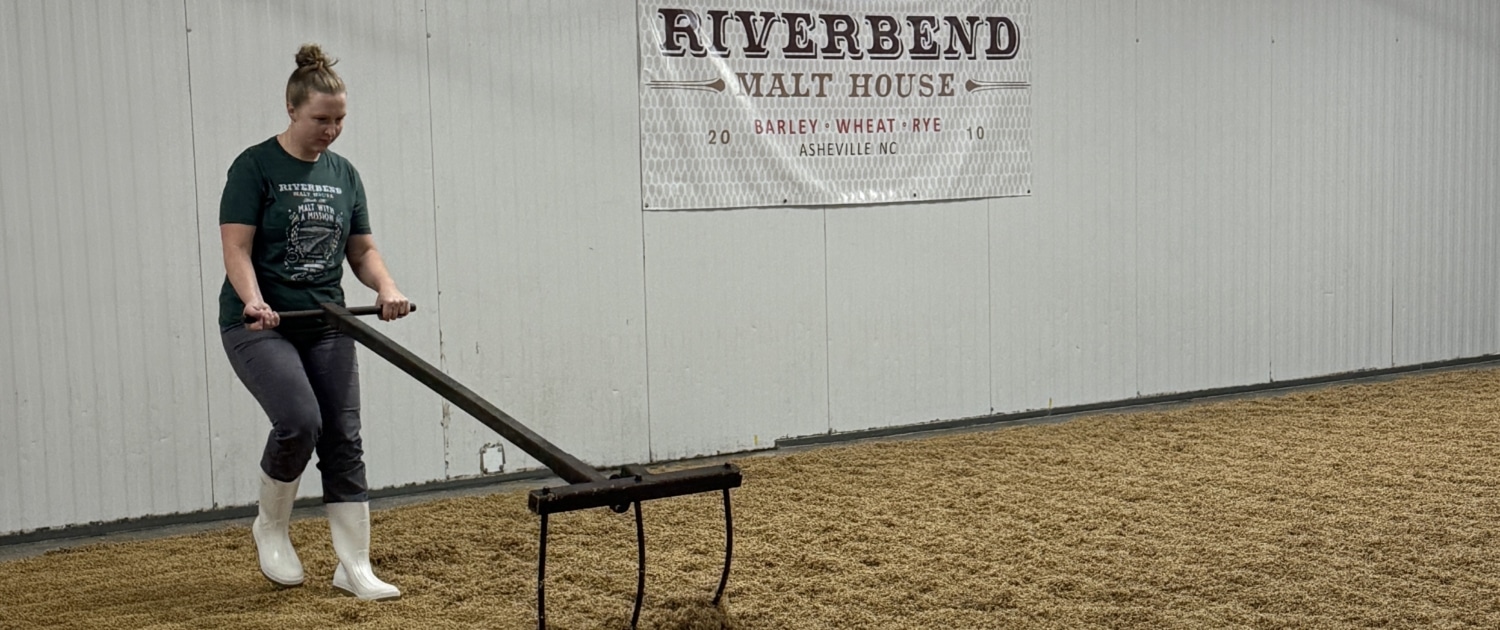
After steeping, the next step in malting is the germination process. The onset of germination is indicated by the small, white “chit” at the end of the grain. This is also when the shoot, called the acrospire, starts to grow. The grain is allowed to grow to a certain point until rootlets sprout at the end of the grain. Germination produces enzymes in the grain, needed for starch conversion during brewing. Many hydrolytic enzymes increase in number during this step and the modification of the starchy endosperm takes place. The starchy endosperm softens, and the plant cell walls break down so that starch is exposed to enzymes that can convert starch to fermentable sugars. During this step it is essential that maltsters turn the grain bed to avoid tangling and clumping from rootlets. This can be done several ways such as using a plow for floor malting or GKV (germination-kilning vessel) for higher volume production. It’s also important to monitor aeration and temperature during germination to avoid overheating the grain bed. When the material is done with this step, it is considered green malt.
Malting Step Three: Kilning
If germination were allowed to continue to the end, the plant would consume all the starch and sugars that brewers and distillers want for ethanol production. So the next step is to kiln the cereal. This process halts germination and builds the malt flavor profiles used in craft beverage production. Green malt is moved to a kiln where hot air is moved through the grain bed to dry and remove moisture from the grain. Lower temperatures for longer periods of time will give sensory characteristics of base malts, such as pilsner or pale malt. And higher temperatures at faster rates will give characteristics of specialty malts, such as munich or vienna. Crystal malts are achieved by “stewing” the malt, which is holding high temperatures and high moisture content in the kiln in order to stew the grain and create the crystalized material. Some maltsters also have roasters, which roast material to produce dark malts used in stouts and porters.
Malting Step Four: Cleaning & Packaging
The final step of malting is cleaning the material and packaging it. First is rootlet removal, where grain is passed through a debearder and rootlet material is removed from the malt. The next step is screening and separation. The malt is passed through a series of screens where only desired grain size and weight is allowed to pass through. Often this step incorporates fans, and lighter materials are separated from the desired malt by blowing air through the malt and blowing away the unwanted material. Once the malt has been cleaned, it is packaged and ready for the consumer.
Sources:
Briggs, D., Boulton, C., Brookes, P., and Stevens, R. (2004) Brewing Science and Practice. Woodhead Publishing.
Kunze, W. (2019) Technology Brewing and Malting. 6th edn. VLB Berlin.
Russell, I., Stewart, G.G. and Kellershohn, J. (2022) Whisky and other spirits : technology, production and marketing. Third edition. London: Academic Press.